Creating a cozy and productive home office space is key to maintaining focus and enjoying your work-from-home experience. Whether you have a dedicated room or just a small corner, the right setup can make all the difference. Here are some practical tips to help you design a workspace that not only feels inviting but also supports your productivity.
Choose the Right Location
Your home office location sets the foundation for your workspace. Ideally, select a quiet area with minimal distractions.
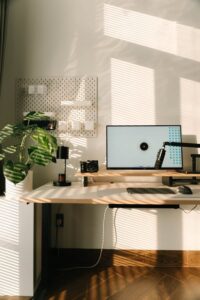
– Natural light: Place your desk near a window if possible. Natural light improves mood and reduces eye strain.
– Privacy: Avoid high-traffic zones in your home to minimize interruptions.
– Space: Ensure you have enough room for your desk, chair, and any equipment you need without feeling cramped.
Invest in Comfortable Furniture
Comfort is essential for long work hours. Choose furniture that supports good posture and reduces fatigue.
– Ergonomic chair: Select a chair with adjustable height, lumbar support, and comfortable cushioning.
– Desk: Your desk height should allow your arms to rest comfortably while typing. Consider standing desks if you prefer to alternate between sitting and standing.
– Footrest: A footrest can improve circulation and reduce back strain if your feet don’t comfortably reach the floor.
Optimize Your Lighting
Proper lighting reduces eye strain and helps maintain alertness.
– Layered lighting: Combine ambient light with task lighting, such as a desk lamp.
– Avoid glare: Position screens to prevent glare from windows or overhead lights.
– Warm lights: Use warm-toned bulbs to create a cozy atmosphere, especially for early mornings or late evenings.
Organize Your Workspace Efficiently
An organized space helps you find things quickly and reduces stress.
– Declutter regularly: Keep only necessary items on your desk.
– Storage solutions: Use shelves, drawers, and organizers to store supplies neatly.
– Cable management: Use clips or cable ties to keep cords tidy and out of the way.
Personalize Your Space
Adding personal touches makes your office feel inviting and boosts motivation.
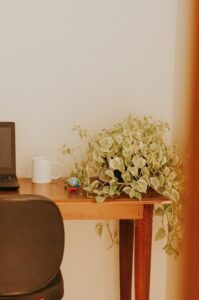
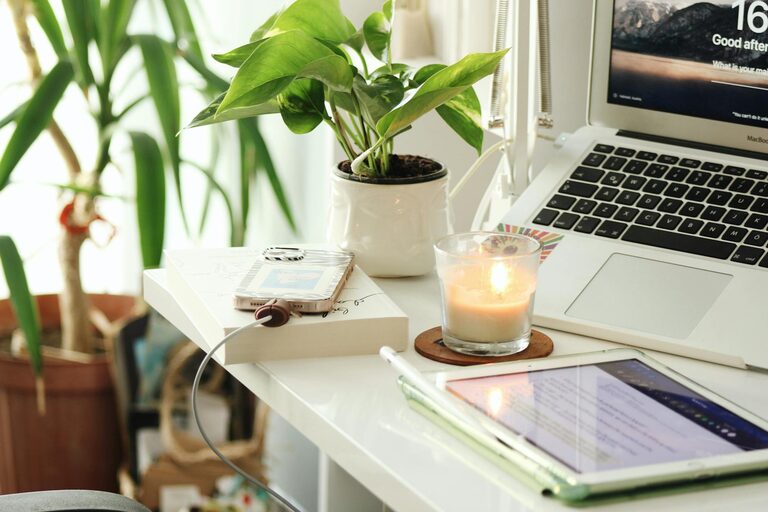
– Plants: A few small plants can improve air quality and create a calming vibe.
– Artwork or photos: Use images that inspire you or bring positive memories.
– Comfort items: Include items like a cozy blanket or a favorite mug to enhance comfort.
Set Boundaries and Create a Routine
Clear boundaries help separate work life from home life and keep you productive.
– Regular hours: Set consistent work hours to build a routine.
– Designated work zone: Train yourself and others in your household to respect your workspace as a work area only.
– Take breaks: Step away from your desk regularly to recharge and avoid burnout.
Incorporate Technology Wisely
Technology is essential but can also be a distraction if not managed well.
– Quality equipment: Invest in reliable devices like a good monitor, keyboard, and headset.
– Declutter digital space: Keep your desktop and files organized.
– Use apps: Consider productivity and time management apps to stay on track.
Pay Attention to Acoustics
Noise can disrupt focus, so consider sound management.
– Noise-canceling headphones: These are great for blocking out distractions.
– Soft furnishings: Curtains, rugs, and cushions help absorb sound.
– White noise machines: These can mask distracting background sounds.
Keep Air Quality and Temperature Comfortable
A comfortable environment supports concentration and wellbeing.
– Ventilation: Open windows or use an air purifier to keep air fresh.
– Temperature control: Adjust your thermostat or use fans and heaters to stay comfortable.
Final Thoughts
Your home office should be a place where focus meets comfort. By carefully selecting your location, furniture, lighting, and organization methods, you can create a space that makes working from home a rewarding and enjoyable experience. Remember, small changes can make a big difference — start with one or two tips and adjust your space over time to find what works best for you.